
PricingMethod
Unified PropTechUSA.ai Net Offer Sheet
How our indices come together into a single, seller-facing offer with transparent line-items and guardrails.
Worried you're being left behind in the AI wave? Get a data-backed view of your options — and, if you're a property owner, a written cash offer that already prices in risk.
Most workers today worry about the same things: pay, promotions, and keeping a seat at the table. In the background, a quieter gatekeeper is deciding who actually moves forward: whether you can think, learn, and execute with AI.
At Local Home Buyers USA, powered by PropTechUSA.ai, we treat AI the way we treat climate risk, insurance, and timing in the housing market: as a first-class signal. This page includes our live AI Workforce Readiness Lab — a SaaS-style application that simulates how your AI habits, industry, and timeline stack up over the next 24 months.
AI Literacy & Income Gaps · Workforce Risk & Reskilling · Education Compounding · Landlords, Sellers & Investors
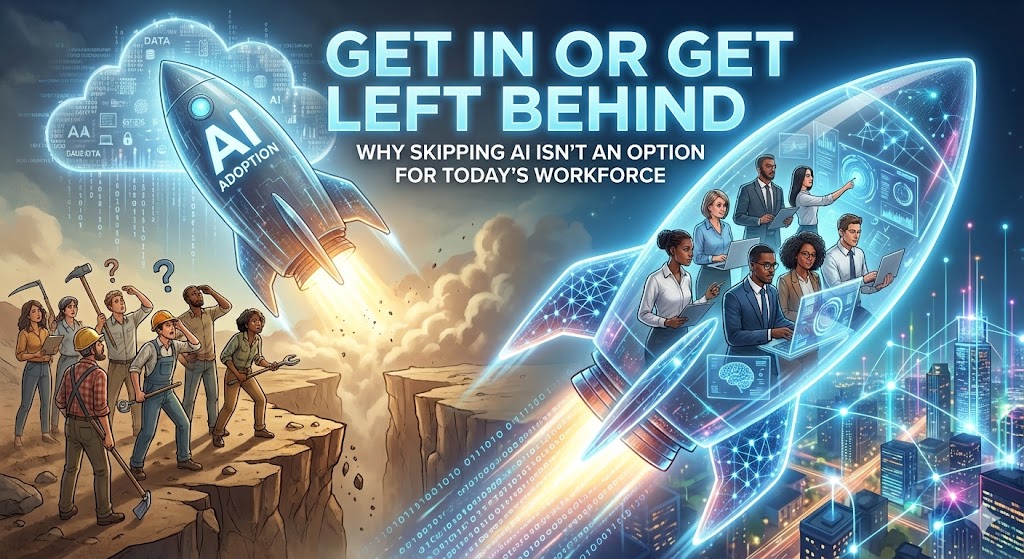
Talk to managers and founders across industries and you'll hear the same story: solid performers, loyal staff, good attitudes — but when it's time to promote or hand over high-leverage work, the opportunities keep drifting toward one specific group: the people who already know how to work with AI.
Not because they're smarter. Because they can:
If you're in your 20s, 30s, 40s, or even 50s with a decade or more left in the game, AI is no longer a nice-to-have hobby. It's the new dividing line between "reliable contributor" and "go-to operator."
Retirees get a pass. People truly on the glide path out of the workforce get a pass. Almost everyone else is now competing in a market that assumes basic AI literacy.
When our research team looks at markets and operators, we don't just see job titles and years of experience. We see a composite signal: how quickly someone can absorb new information, adapt their workflow, and turn messy real-world inputs into decisions.

Imagine a simple internal "Skill Score," from 0–100, that reflects a worker's ability to think and execute with AI tools:
A résumé might say "10+ years of experience." A low Skill Score says "still working like it's 2013." A high Skill Score says "this person learns faster than the market is changing."
In our own world — underwriting real estate risk — that Skill Score shows up in how quickly a team member can move from raw research like the Uninsurable Index & Safety Scores or the new appraisal gap between Zestimates, appraisers, and cash buyers into a clear, risk-adjusted offer for a seller.
Adjust the options below to see how your AI habits, industry pace, and time horizon translate into a "Get-In Score" and replacement risk.
On your current trajectory, AI is something that happens around you, not through you. That is exactly how "quiet replacement" begins.
A short 30–60 day sprint of focused AI reps can move you out of the risk band and into the compounding band where promotions, raises, and better deals cluster.
This lab is for illustration only and is not a hiring, firing, or investment tool. We use similar logic when we underwrite homes and portfolios: map the risk, see the paths, then move before the market forces your hand.
AI doesn't usually get people fired overnight. That's not how this works. Instead, a "Get-Left-Behind Index" creeps up in the background:
None of this shows up as a single dramatic event. It shows up as drift. And drift is hard to notice until the distance is measured in years of missed upside.
Your house has a "Get-Left-Behind Index" too. Just like skills expire, homes age out of insurability and financing. In real estate, we see the same pattern with pricing and risk: owners who refuse to see new data — whether it's insurability risk in a high-risk ZIP code or the timing traps outlined in The Sunday Night Spike & Monday Negotiation Risk — slowly fall out of sync with where the market has already moved.
The Get-Left-Behind Index is simply this: how far your skills, habits, and tools are drifting from the frontier of what's possible.
When people avoid AI, their careers rarely implode for one single reason. The damage tends to cluster in three predictable patterns you can actually plan around.
On the surface, everything looks similar: same job, same meetings, same responsibilities. Under the hood, your peers who use AI:
Over 12–24 months, that translates into clearer impact and a much stronger story when promotion season rolls around. You may not feel "punished" for skipping AI, but you will feel overlooked.
Hard work still matters. It just doesn't scale the same way if your tools are stuck in the past. Without AI, your primary lever is more hours. With AI, your primary lever is better systems.
That's the same reason owners who ignore underwriting realities end up stuck: they try to "work harder" to sell a property that the data already considers high risk. Our deep-dive resources like the Minnesota Landlord Exit Masterclass 2025 exist precisely to break that loop — to swap blind effort for intelligent restructuring.
AI isn't just about personal productivity. It's how you scan for pattern breaks:
When the rules of the game change, AI-literate professionals can run quick scenario maps: "If this happens, what does it do to my income, my business model, or my holdings?"
The same way our research on the appraisal gap or the Uninsurable Index lets us simulate where deals will break before they hit the MLS, AI lets individuals simulate where their careers might break before they hit a layoff memo.
Most people still picture their career path like this: learn → get hired → work hard → move up → retire.
The real map in an AI-driven economy looks more like:
If you skip step 2, you get stuck between "baseline" and "reorg." You're reliable, but not leveraged. Valuable, but not indispensable.
Property owners feel a similar gap when they cling to a purely retail exit in markets that have already shifted. Our timing research — including the Sunday Night Spike memo — is really about one thing: mapping where the system is most fragile before you arrive there.
Your career has an AI gap in its timeline. The only question is whether you cross it early, on your terms — or hit it later, under pressure.
You don't need a coding bootcamp or new degree. You need a short, intense ramp where AI becomes normal, not novel.
Your only goal this week is comfort. Treat it like a junior analyst who never gets tired.
After 30–60 days, you're not "done" learning. But you've crossed the gap: AI is no longer a buzzword; it's built into how you move through the day.
If you run a team, a brokerage, or a portfolio, AI is no longer an individual preference. It's an organizational capability — and a brand promise.
This is the philosophy behind Local Home Buyers USA itself. We don't just offer "fast cash." We offer AI-informed, research-backed options:
Inside your own organization, the same pattern holds: teams that pair human empathy with machine-level analysis are the ones sellers, clients, and partners will trust.
Who really gets a pass on learning AI?
A small minority. People who are fully retired, genuinely in their last few working years, or in short-term roles that will end soon can probably ignore AI and be fine. If you still rely on your income or portfolio performance — and expect to take new opportunities in the next 5–10 years — you should assume AI literacy is now part of the job.
Do I have to become a programmer or data scientist?
No. For most workers, AI literacy looks more like learning email or spreadsheets than learning to code. You need to know how to ask sharp questions, interpret answers, and blend them with your own expertise. A handful of people will go deep into automation; most simply need to become excellent "AI operators" in their domain.
What if my company isn't talking about AI yet?
That might be your window. Many organizations are cautious or slow. If you quietly build your own playbooks on public, non-sensitive work, you'll be ready the moment leadership asks, "Who here actually knows how to use this?" Being that person can change the trajectory of your career.
How much time does it really take to get comfortable?
For most people, 30–60 days of consistent reps — 10 to 20 minutes per workday — is enough to move from "I feel behind" to "I can get real leverage from this." After that, your learning compounds because AI is baked into how you operate.
Where does AI fit if I'm a landlord or real estate investor?
AI can review leases, summarize inspection reports, draft tenant communications, and help you digest complex research like our Uninsurable Index, our appraisal gap analysis, or the Minnesota Landlord Exit Masterclass. It doesn't replace your judgment; it multiplies it — if you're willing to learn.
If you're retired, enjoy it — you already ran your race. If you're still in the arena, building a career, a business, or a portfolio, the choice is simple: learn to work with AI, or plan on competing against people who do.