
TL;DR: One Hub, 50 State Playbooks
Your home sale shouldn’t start with guesswork. This directory is the front door to every state-level resource Local Home Buyers USA has built: timelines, disclosures, risk indices, and data-backed options to sell with the market instead of against it.
Use it to:
- Find your state’s home-selling guide in two clicks.
- See how long typical listings sit before they risk the days-on-market death spiral.
- Check whether your area is facing an insurance or “uninsurable home” crunch.
- Understand your local economic stability profile (LESI) and what it means for timing.
- Compare a traditional MLS listing against a PropTech-backed Net-First Offer valuation.
Why a State-by-State Directory Exists Now
The U.S. housing market didn’t just get “hot” or “cold” — it got fragmented. Insurance rules in one state, tenant laws in another, and lender overlays in a third have created a patchwork of micro-markets that don’t behave like the national headlines.
At the same time, tech has quietly taken over the home-selling journey:
- Algorithms estimate value and “risk” before a human ever looks at your house.
- Search engines and portals decide which listings surface — and which turn stale in silence.
- Underwriting, insurance, and investor appetite can shift your buyer pool with a single policy change.
For accidental landlords, this fragmentation is brutal. Many became landlords by accident — job transfer, divorce, or inheritance — and now find themselves trapped in a market that doesn’t match the story they were told in 2021. Our research on the Accidental Landlord Exodus shows why millions of owners are quietly planning their exit before 2027.
The directory exists to answer a simple question with state-level precision: “What does selling look like where I live — and what’s my smartest path out?”
How to Use This Directory (In 3 Clicks)
You don’t need to be a data scientist to use this. Think of the directory as a “control center” for your state. Here’s the simplest way to put it to work:
- Find your state in the directory below and open its guide in a new tab.
- Skim the dashboard sections first — timelines, days-on-market risk, insurance notes, plus our local stability score.
- Match your situation to the path that fits: retail listing, hybrid strategy, or a direct Net-First cash offer from Local Home Buyers USA.
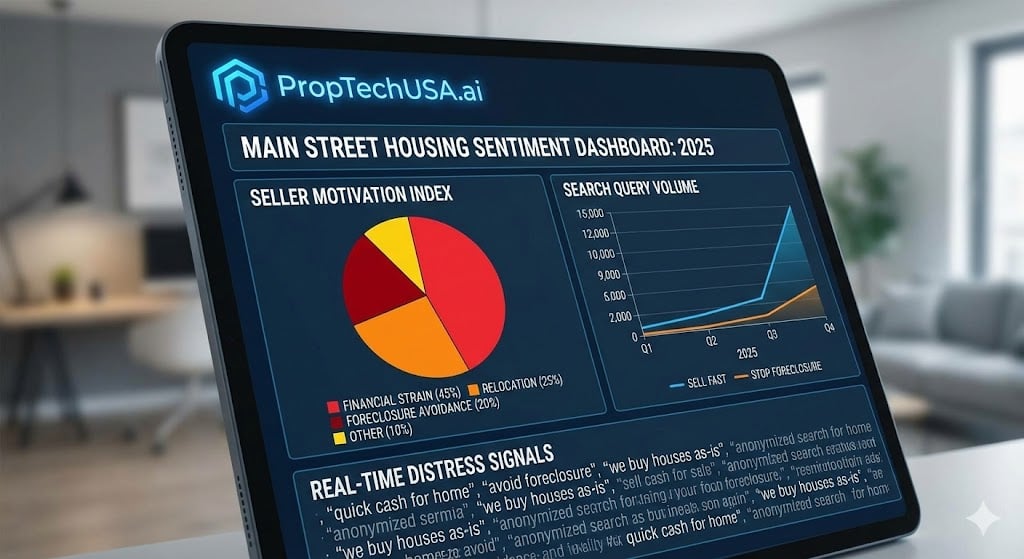
Most sellers use the directory in one of three ways:
- Pre-listing filter: “Should I even list, or will I get stuck in a price-cut loop?”
- Plan B design: “If the MLS doesn’t work, what’s my back-up exit strategy?”
- Decision accelerator: “I’m ready to be done — what does a clean, tech-enabled sale look like?”
State-by-State Home-Selling Directory
Below is a fast-launch directory to the states where Local Home Buyers USA and PropTechUSA.ai are most active today. Each link takes you to a dedicated guide with state-specific timelines, seller protections, and exit options.
South & Southeast
- Alabama Equity + speed
- Florida Insurance & coastal risk
- Georgia Investor-heavy pockets
- North Carolina Growth vs. DOM risk
- South Carolina Coastal & resort markets
- Texas Local swings, big spreads
Midwest & Great Lakes
Coastal & High-Cost States
- California Regulation & tax nuance
- Connecticut Commuter & coastal splits
- Arizona Investor share & iBuyer hangover
- Wisconsin Lake markets & legacy homes
More States (Growing Coverage)
- Louisiana Storm & insurance shocks
- Additional Midwest & Sunbelt Expanding coverage
- Don’t see your state yet? Request a custom review
New and updated guides are rolling out continually. If your state isn’t listed yet, you can still request a custom, Net-First review from Local Home Buyers USA and we’ll apply the same data framework to your property and local market.
Live 2026 Home-Seller Strategy Console
Use this console to get a quick, directional view of how a traditional listing, hybrid approach, or Net-First direct sale might line up for your state, property type, and priority. It’s not legal or tax advice — it’s a PropTech-informed sanity check before you commit.
Hybrid advantage: list with a Net-First safety net in Florida
In your selected state, a balanced seller with an “as-is” or older home is often best served by a retail listing launch with a tight pricing window, backed by a written Plan B: a Net-First direct offer if insurance, inspections, or buyer financing fall apart.
You’re evaluating Florida with a move-in ready / updated property and a balanced priority set.
What You’ll Find Inside Each State Guide
Every state guide follows a similar architecture so you don’t have to re-learn the format each time. Think of it as a state-specific operating manual for selling your house in the next 12–24 months.
1. Market Snapshot & “Days-on-Market” Risk
We start with a high-level look at where your market sits on the curve — including how many listings are quietly drifting into stale-listing territory. Instead of vague “it’s a seller’s market” language, you see how patient you can realistically afford to be.
2. Local Economic Stability Index (LESI)
Next, we overlay our Local Economic Stability Index (LESI) — a composite view of job trends, population flows, and stress signals that influence buyer confidence. A strong LESI might support a premium retail listing strategy. A weakening LESI might point toward a faster, certainty-first exit.
3. Insurance, Inspection & “Uninsurable” Red Flags
In some states, insurance has become the make-or-break variable. Our Uninsurable Index & Safety Scores research feeds into each guide so you understand how likely buyer financing is to fall apart over roof age, storm history, or location.
4. Seller Pathways: Retail, Hybrid, or Direct
Finally, each guide compares three core routes:
- Full retail listing: Maximize top-line price, accept higher risk of time, repairs, and concessions.
- Hybrid routes: List with a back-up plan or structured exit if the market turns on you.
- Tech-enabled direct sale: Use our PropTech home valuation stack to see your Net-First numbers for a fast, as-is exit without fees or showings.
Tech-Enabled vs. Traditional Routes: How This Directory Helps You Decide
This isn’t a “we buy houses, everything else is bad” pitch. In many markets, a well-executed retail listing still makes sense — especially for move-in-ready homes in low-risk ZIP codes. The problem is that most sellers don’t know which side of the line they’re actually on.
By combining local risk signals, market narratives, and your property’s condition, the directory helps you answer:
- “If I list, what’s my realistic timeline before I’m forced to cut?”
- “If I don’t list, what’s my cleanest path to a predictable net number?”
- “What happens if insurance or financing changes mid-sale?”
Think of Local Home Buyers USA as your “Plan B” that you can price out before you commit to Plan A. Our goal is to make the tech stack invisible and the decision incredibly obvious.
Action Plan: From Directory to Offer in 48 Hours
If you want to turn this directory into a decision quickly, here’s the streamlined path most sellers follow:
- Open your state guide and skim the top sections: timelines, LESI score, and insurance or financing notes.
- Mark your risk triggers: Is your home older, tenant-occupied, inherited, or sitting vacant? Are you exposed to storms, fires, or local policy changes? Use the guide like a checklist.
- Run the Net-First view: Share your basic property info with Local Home Buyers USA to see how a direct, as-is sale would compare to riding out a full retail listing.
- Decide with numbers, not hype: Take 24 hours to compare your options. If the math favors a tech-enabled exit, you can move to a clean contract and set your closing date. If not, you’ve still learned how to sell smarter in your state.
Ready to see how your state, your house, and your timing line up on the 2026 map? Use the directory to understand the landscape — then request your Net-First offer to see your numbers in writing.
FAQ: Using the Home-Selling Directory
What is the America’s Home-Selling Resource Directory?
It is a nationwide, tech-enabled library of state-by-state home-selling guides created by Local Home Buyers USA and powered by PropTechUSA.ai. Each guide explains your timelines, disclosure rules, days-on-market risks, insurance and financing red flags, and the options you have to sell your home, from traditional listings to data-backed direct offers.
How do I find the guide for my state?
Scroll to the regional directory above and click on your state. You will be taken to a dedicated state guide that breaks down market conditions, timelines, seller protections, and your options for retail, hybrid, or direct-to-buyer paths.
Does this directory replace advice from a local real estate agent or attorney?
No. The directory is an educational resource that helps you understand your options and the forces shaping your local market. It is not legal or tax advice. We encourage sellers to speak with local professionals whenever they need personalized guidance for their specific property or situation.
Can I use this directory if my house needs repairs, has tenants, or other issues?
Yes. Many of our state guides include sections for inherited homes, rental properties, code issues, uninsurable homes, and other complex scenarios. If your situation doesn’t fit neatly into the traditional MLS box, you can still request a Net-First cash offer from Local Home Buyers USA with no repairs, showings, or fees.
How much does it cost to get an offer through Local Home Buyers USA?
Requesting an offer is 100% free and comes with no obligation. You can share basic property details, see your numbers in writing, and decide whether a tech-enabled direct sale is a better fit than listing or waiting on the open market.