
Tax-Delinquent Properties (2026 Guide): How to Sell Before Foreclosure or Auction
Property taxes behind? This guide walks you through the exact stages of tax delinquency, shows you how fast penalties snowball, and lets you run a live Tax-Delinquent Exit Calculator so you can see whether listing, waiting, or a cash buyer who pays the taxes nets you the most.
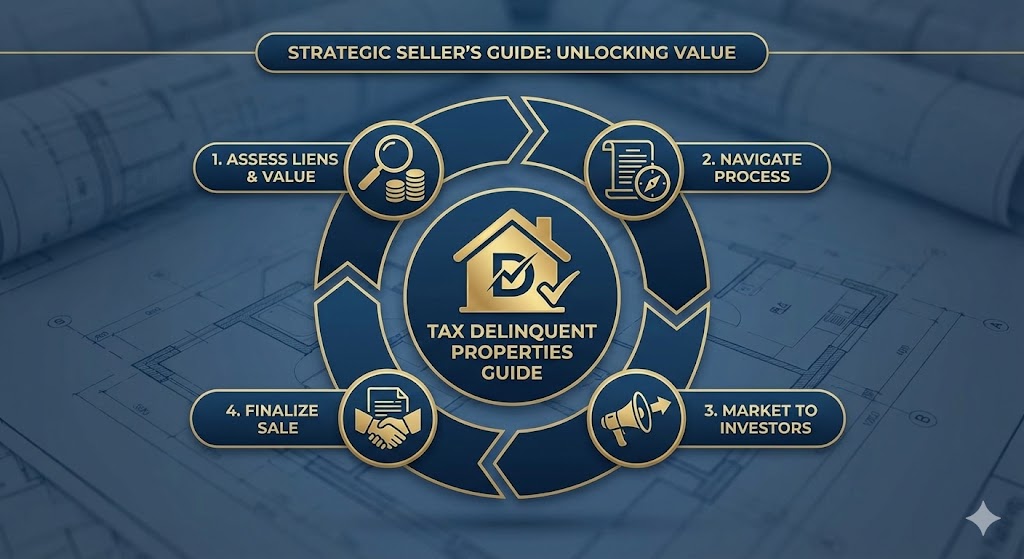
Part I: What “Tax Delinquent” Really Means in 2026 (Plain English)
Every state has its own rules, but the pattern is similar nationwide. When you miss a property tax payment:
- The county adds penalties and interest.
- Your account is marked tax delinquent.
- At some point, the county either sells the tax lien or moves toward a tax deed sale or foreclosure.
In a normal sale, your mortgage company and the county are both paid off at closing. With a tax-delinquent property, the county is essentially saying, “We’ll wait… but only for so long.” Once a tax sale date is set, the window to protect your equity shrinks fast.
If you want a refresher on the basics of how selling a house works (agents, net sheets, closing costs), read Real Estate 101: Everything Homeowners Should Know Before Selling a House, then come back to this guide.
Missed Payment & Delinquency
You miss one or more tax payments. Late fees and interest begin to pile up. Certified letters start arriving in the mail. At this point, you still control every option: catch up, sell, or refinance.
Tax Lien / Certificate Sale
In many areas, the county sells your tax debt as a lien or certificate to an investor. You still own the property, but now someone else is earning interest off your hardship. The clock quietly speeds up.
Redemption Window
You may have a set number of months or years to redeem the property by paying taxes, interest, and fees. During this time you can usually still sell the house, pay everything at closing, and walk away with your equity.
Tax Sale / Foreclosure
If you don’t redeem in time, the county can sell the property at auction or issue a tax deed to a new owner. At that point, you may lose both the house and most of your equity for pennies on the dollar.
If this sounds a lot like traditional foreclosure, you’re right—but in many states, tax foreclosure can move faster and be less forgiving. That’s why timing is everything. For the bigger 2026 context, see Selling a House in 2026 and Days-on-Market Death Spiral & Stale Listings.
See Your Net: Listing vs Waiting vs a Cash Buyer Who Pays Your Taxes
Use this net-first calculator to compare four paths using your real numbers: list now, wait and catch up later, sell to a cash buyer who pays the taxes, or gamble on a last-minute auction scenario. The goal: highlight which path protects the most equity before the county or the clock takes it.
Step 1 – Tell the Calculator About Your Situation
This tool is educational math, not tax or legal advice. For a binding offer, talk to our team or read how we price in the New Appraisal Gap: Zestimates vs Appraisers vs Cash Buyers.
Start with the defaults, then plug in your real back-tax balance and timeline. We’ll highlight which path currently protects the most equity before the auction clock runs out.
- ✅ Works if the home qualifies for financing
- ⏱ Timeline: 60–120 days in most markets
- ⚠️ Risk: buyer repairs & appraisal surprises
- 💸 Penalties & interest continue every month
- ⏳ Auction window keeps shrinking
- ⚠️ High risk of losing leverage to the county
- ⚡ Close in as little as 7–14 days
- 🚫 No repairs, agents, or showings
- 🛡 Timeline risk transfers to the buyer
- 💥 Deep discounts to attract a fast buyer
- 📉 Auction bids often below 65–70% of value
- 🚫 County & legal costs come off the top
Want a human review of your numbers? Call 1-800-858-0588 or request a Net-First cash offer. For deeper context on volatility, see 20 Years of Real Estate Market Trends (2005–2025).
Part III: 90-Day Playbook to Beat the Tax Clock
Day 0–15: Map the Damage
- Pull your exact back-tax balance, penalties, and future penalty schedule from the county.
- Confirm your redemption deadline or tax sale date in writing.
- Get a reality check on value using both human and data sources: Liquidity Paradox and New Appraisal Gap explain why Zestimates alone are not enough.
Day 16–45: Choose Your Lane
- If the calculator shows listing wins, interview agents who have actually closed tax-delinquent or distressed sales in the last 12 months.
- If cash or partnership wins, request written offers and focus on net, not “headline” price.
- Re-run the calculator weekly—especially after inspection reports, big repairs, or county notices.
Day 46–90: Execute Without Hesitating
- Lock in your route before the redemption window closes.
- Keep a paper trail of every tax payment and communication with the county.
- Use our guide Real Estate 101: Everything Homeowners Should Know Before Selling a House to prep for closing day math.
Once an auction date is public, your negotiating power with traditional buyers collapses. You’re no longer “a motivated seller”—you’re a deadline. Our in-house data team tracks how quickly Days-on-Market can turn into a DOM death spiral.
When the calculator shows that a Local Home Buyers USA offer is within striking distance of a perfect-world retail net—but closes 60–90 days faster and clears your taxes in one wire—that’s usually the move.
Curious how technology gets us there? Read Selling a House in 2026 and 2026 Tech Trends That Will Transform How You Sell Your Home .
Part IV: How PropTechUSA.ai Reads Tax-Delinquent Risk
Behind the scenes, our research arm, PropTechUSA.ai, blends tax-roll data, listing performance, and macro trends to understand when a tax-delinquent property is likely to stall, sell, or spiral toward auction.
- Penalty Velocity: how fast monthly penalties and interest are compounding relative to local appreciation.
- Financing Fragility: how many nearby deals are falling apart over repairs, insurance or appraisal issues—see our 20-year real-estate trends review.
- Buyer Psychology: search and sentiment patterns from “sell my house fast” psychology and related queries.
- Uninsurable Risk: flood, fire, and insurance friction we map in the Uninsurable Index.
- iBuyer Aftermath: how the end of corporate iBuyer programs reshaped pricing power, covered in From iBuyer Winter to PropTech 2.0.
All of that flows back into a simple promise: we show you the math, in writing, before you sign anything. If our cash offer wins in the calculator, you’ll know exactly why. If listing beats us, we’ll tell you that too—and send you straight to our Compare Home Offers playbook.
Part V: Tax-Delinquent FAQ (2026)
How fast can Local Home Buyers USA close on a tax-delinquent house?
In many cases we can close in as little as 7–14 days, depending on title work and how quickly we can verify the tax payoff with the county. Because we’re paying cash, there is no lender underwriting or appraisal delay. That’s what makes Scenario C in the calculator so powerful when the auction clock is ticking.
What if I’m already on a payment plan with the county?
A payment plan can buy time, but it usually doesn’t stop interest or penalties. Use those numbers in the calculator as your “monthly penalty” input. If the math shows you’re burning thousands in penalties just to delay a sale, it may be smarter to sell now and reset your finances.
Can I still sell if there’s also a mortgage or HOA lien?
Yes. Most tax-delinquent properties also have mortgages, HOA balances, or code enforcement fines. As long as the total payoff is less than what the property can sell for, we can usually structure a closing where all liens are paid off at once and you receive the remainder.
What happens if my house actually goes to tax auction?
At auction, bidders often target 60–70% of true value to leave room for repairs and profit. Your taxes, interest, legal fees, and costs come off the top. That’s why the calculator almost always shows the auction scenario with the lowest net. The key is to act in Stage 2 or Stage 3—before you’re negotiating from a place of panic.
Work With Local Home Buyers USA — Before the County Works Against You
Local Home Buyers USA is a data-driven homebuyer operating nationwide, powered by the research of PropTechUSA.ai. Whether you’re one payment behind or staring at a tax sale date, our job is simple: show you the numbers, protect as much equity as possible, and move fast enough that the county never gets the last word.
Start by running the calculator above with your real numbers. Then:
- Call 1-800-858-0588 to walk through your options live, or
- Request a Net-First cash offer where we pay the back taxes, fees, and closing costs.
However you choose to sell, use this guide—and our other resources like How Global Events Are Reshaping the Real Estate Market in 2025 —to make decisions with your eyes open and the math on your side.