
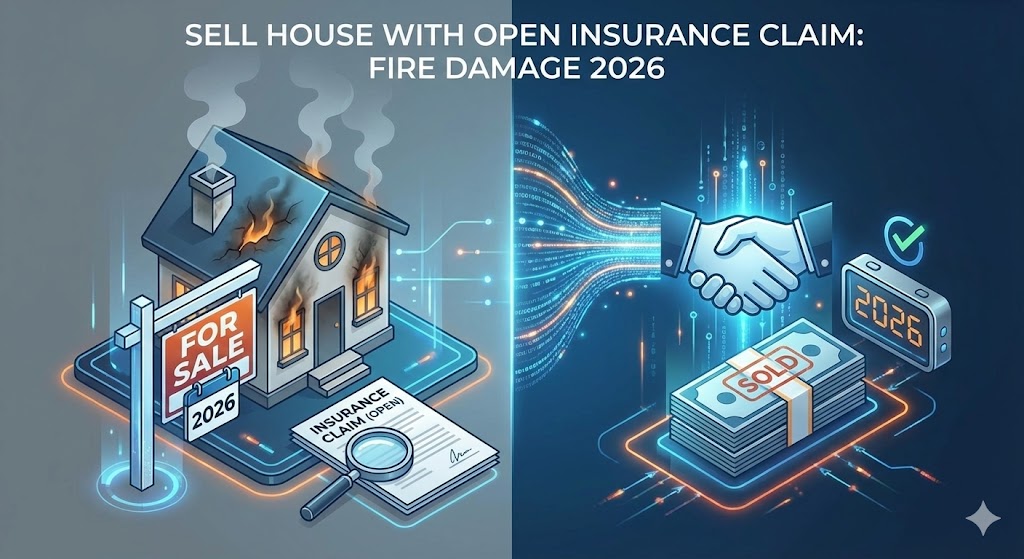
Start Here: The Claim-to-Close Map (6 Steps)
Fire-damage sales move fast when you treat them like underwriting: stabilize the file, stabilize access, stabilize documentation, then choose the lane. This map keeps you out of “weeks of nothing.”
The 3 Payout Structures (Plain English)
This is the part that confuses sellers the most. You’re not just selling a home—you’re deciding what happens to the claim value and the repair scope. Here are the three common structures you’ll see (always confirm specifics with your insurer and closing professionals):
| Structure | Best for | Trade-off | What to watch |
|---|---|---|---|
| Keep the claim Seller controls payout | You want control and you’re able to handle claim admin. | More documentation, more “paper friction.” | Timing of payments, lender/mortgage involvement, repair scope clarity. |
| Assign/transfer rights Buyer controls repairs | Speed + simplicity when buyer is equipped to manage restoration. | Buyer will discount for uncertainty and admin burden. | Whether assignment is allowed; documentation quality and chain-of-communication risk. |
| Escrow / holdback Close now, fix later | You need to close, but repairs/claim items are still in motion. | More moving parts and coordination at closing. | Clear scope, clear timeline, and who approves releases. |
The Selling Lanes (Cash vs Novation vs Listing)
The “right” lane depends on your friction level and your tolerance for project management. Think of this as a decision matrix, not a debate.
| Lane | Best for | What you gain | What you give up |
|---|---|---|---|
| Cash Offer certainty lane | Open claim + heavy damage + you want speed. | Compressed timeline, fewer “financing gates.” | Upside (buyer prices the uncertainty). |
| Novation structure + upside | Damage is manageable and the file can be stabilized. | Higher net potential with a structured plan. | More steps than cash; still less than retail chaos. |
| List as-is market exposure | You can tolerate showings, negotiation, and buyer dropouts. | Potentially higher bids if the market is hot. | Variance: buyers may retrade hard; lender gates can kill deals. |
| List after repair max effort | You have time, capital, and project bandwidth. | Max retail positioning. | Time + contractor risk + “scope creep” risk. |
Why Fire-Claim Deals Stall (The “Risk Gap”)
Most sellers think the risk is “damage.” In reality, the risk is the gap between what people assume is true and what the transaction needs to verify. That’s the Seller Risk Gap in action.
- Scope uncertainty: “It’s just cosmetic” becomes systems, smoke, electrical, framing, HVAC, or permit issues.
- Claim uncertainty: payout stage, documentation completeness, and timing create dead zones.
- Buyer financing gates: lenders don’t love unresolved condition risk.
- Concession stacking: credits + repairs + rate buydowns + timeline extensions (see Concession Economy).
- Closing friction tax: every new moving part increases variance (see Friction Tax 2026).
Interactive App: Claim-to-Close Estimator
This estimator flags likely timeline bands, recommends a claim structure, and suggests the selling lane that fits your friction profile. It’s not legal/insurance advice—just a high-level operational model.
Estimator
structure • lane • timeline • risk flagsFAQ
Can I sell a fire-damaged house if the insurance claim is still open?
Often, yes—depending on the condition, buyer type, and how the claim/payout is structured. The key is choosing a structure (keep/assign/escrow), documenting the scope clearly, and picking a selling lane that matches your timeline and risk tolerance.
Who gets the insurance money if I sell?
It depends on the structure and what’s agreed to in writing. Common approaches include the seller keeping the claim, transferring/assigning rights (when allowed), or using escrow/holdback to close while repairs are still in motion.
Will a buyer using a mortgage have trouble buying a fire-damaged house?
Sometimes. Financed buyers can face stricter condition requirements, which increases timeline variance. If speed and certainty matter, a cash lane can reduce “financing gates.”
Do I have to offer concessions when there’s fire damage?
Concessions often increase when uncertainty increases (scope, timelines, lending). That’s why “concession stacking” matters—credits, repairs, rate buydowns, and timeline extensions can compound. See: The Concession Economy Report.
What if the house is tenant-occupied?
Tenant occupancy changes access, timelines, and the buyer pool—so it must be handled intentionally. Start with: Tenant-Occupied Property Playbook.
Disclosure: This content is educational and not legal, insurance, or tax advice. Rules and practices vary by insurer, mortgage status, state, and transaction structure.