
The Concession Economy Report: The Hidden Price Cuts Reshaping Home Sales
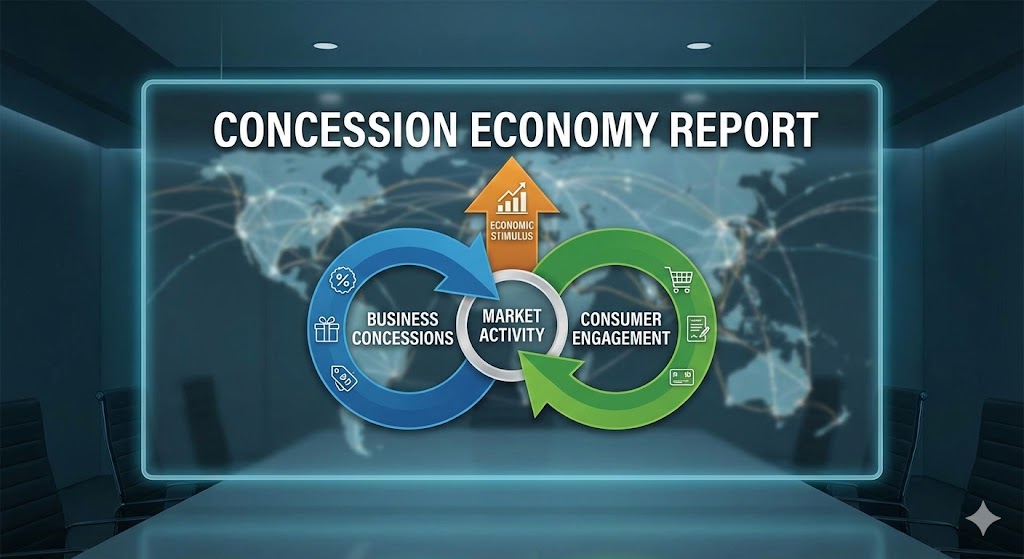
Price is getting sticky. Not because sellers are irrational—because the market’s clearing mechanism changed. In today’s environment, many deals don’t clear through a visible list-price reduction. They clear through a terms package: credits, buydowns, repairs, warranties, and “quiet discounts” that never show up as a headline drop.
That shift creates a new reality: the “sale price” is often not the number. It’s the offer architecture. If you understand the architecture, you can protect net proceeds, shorten timelines, reduce fall-through risk, and stop losing leverage during inspection and appraisal. If you don’t, you can spend 30–60 days negotiating in public—only to end up at the same destination you could have chosen with certainty upfront.
What “Glass-Box Cash Offer” means (and why it matters in the concession economy)
A Glass-Box Cash Offer isn’t “just a cash offer.” It’s a transparent offer where you can see the logic: repair assumptions, holding costs, resale risk, and the certainty premium. In a concession-driven market, transparency stops you from trading away net proceeds through a dozen small concessions you didn’t price correctly. See the Glass-Box approach →
Terminal Snapshot • Concession Regime
STATIC • swipe →Executive summary
If you want a single sentence that explains today’s market: buyers don’t negotiate price first—they negotiate risk and payment. And concessions are the tool that turns risk into a solvable line item.
A price cut is a visible admission. A concession is a targeted subsidy. That’s why concessions scale in sticky-price markets: they let sellers preserve the headline number while still enabling a buyer to clear underwriting, cash-to-close requirements, or post-inspection uncertainty.
This report shows you: (1) why concessions took over, (2) how to value them, (3) how to avoid giving away net proceeds by accident, and (4) when certainty wins. If you’re coming from our macro framework, start here: The End of the Retail-Ready Era.
If you’re ready to stop negotiating in public, you can request a transparent offer here: Get an offer.
Why concessions took over (and why they’re not “free”)
In older housing cycles, price did most of the clearing. If demand softened, sellers cut the number and deals moved. Today, price cuts still happen—but a growing share of the clearing happens through terms. Concessions are the bridge between a seller’s price anchor and a buyer’s payment reality.
The concession economy grows when three forces collide:
- Affordability ceilings: buyers don’t buy houses; they buy monthly payments—mortgage + taxes + insurance + HOA + utilities.
- Underwriting friction: appraisals, reserves, documentation, and repair flags convert “maybe” into “not financeable.”
- Risk perception: inspection narratives magnify unknowns; unknowns become leverage.
Concessions can solve each of these. But they also create a new danger: the concession stack. One concession feels manageable. Three concessions become a hidden price cut. Five concessions become a slow-motion net proceeds collapse that most sellers don’t notice until closing.
Terms are now a primary clearing mechanism
Redfin reported sellers provided concessions in 44.4% of U.S. home-sale transactions in Q1 2025—near the record high. That matters because it shows concessions aren’t a niche tactic; they are mainstream market structure. Source
When concessions become normal, you get a “new negotiation default.” Buyers begin to assume a credit is available. Agents begin to write offers expecting something. And sellers who refuse to play the new game can sit longer, take more tours, and still end up conceding later—often under worse leverage during inspection or appraisal.
The hidden reason sellers prefer concessions to price cuts
A visible price cut is a signal to the market: “we’re flexible.” It can help, but it also attracts sharper negotiation. A concession is more surgical. It targets a buyer constraint—cash to close, payment, or risk—without changing the headline. And in markets where sellers emotionally anchor to their number, the “headline preservation” effect is real.
But headline preservation is not profit. Net proceeds is profit. That’s why the only responsible way to choose concessions is to compare them to the alternatives: price reduction, repairs, or certainty paths. That’s exactly what the simulator below does.
Reality Box: price cut vs credit vs buydown (mini net-sheet simulator)
This is a simplified model. It’s not financial advice. But it’s good enough to answer the question that matters: what are you really paying for this deal to close?
What this simulator reveals (in plain English)
A price cut feels like the “cleanest” concession because it’s simple. But it’s also the most permanent: it reduces the base that everything else is calculated on. A seller credit can be more targeted. It can solve a buyer’s cash-to-close constraint or inspection anxiety without lowering the headline.
A buydown is the most psychologically powerful concession because it changes the monthly payment directly. But buydowns are often misunderstood. They do not “create money.” They transfer value from the seller to reduce the buyer’s payment or rate—sometimes for one year, sometimes for the life of the loan, depending on the structure.
In a concession economy, smart sellers don’t ask: “Should I give concessions?” They ask: Which concession buys the most certainty per dollar?
Delisting pressure: when sellers pull listings instead of cutting price
Sticky-price markets produce a specific behavior: sellers would rather withdraw than publicly capitulate. That matters because it changes the negotiation landscape. If sellers pull listings, fewer “public” price cuts appear, and buyers underestimate the real softness—until they see concessions demanded in escrow.
Realtor.com reported that for every 100 newly listed homes in October 2025, 27 previously listed homes were yanked from the market (a 0.27 delisting-to-new-listing ratio), up from 20 a year prior. This is exactly the kind of signal you’d expect in a concession economy: sellers resist headline reductions, so deals clear through different channels. Source
What delisting pressure means for sellers
When sellers pull listings, buyers do not see as many “discounted” homes in the public feed. That keeps seller confidence elevated and prevents a fast visible repricing. But it also pushes the clearing into private negotiation. That’s where concessions thrive.
If you’re selling, delisting pressure is a warning sign: a meaningful share of the market would rather “pause” than “cut.” That increases the importance of choosing your strategy up front: compare your selling paths, and if you want the purest certainty comparison, model it using PVI.
Cancellation risk: why “almost sold” isn’t sold
In a concession economy, fall-through risk becomes leverage. Buyers know deals are more fragile; sellers feel the pressure of lost time; and everyone becomes more sensitive to inspection, appraisal, and underwriting friction.
Redfin noted that about 13% of pending home sales were canceled in March 2025 in the same report that documented near-record concession prevalence. This is the connection most sellers miss: concessions are not just “buyer incentives.” They are often risk management tools used to keep deals alive. Source
What buyers do when they have leverage
When buyers believe deals fall apart, they negotiate with a different posture. They ask for:
- Risk transfer: “Fix it or credit it.”
- Payment relief: credits or buydowns.
- Deal insurance: appraisal gap support, longer contingencies, or more due diligence.
The seller’s job is not to win the argument—it’s to win the outcome. That means pricing concessions intentionally and using them to buy the right thing: a closing that performs.
If inspection leverage is where you’re getting hit, study this: Inspection contingency tactics. Your negotiation outcome is often decided by whether you can control the inspection narrative.
The concession menu: what each “discount” is actually buying
Concessions feel chaotic because they look like a grab bag. But they cluster into three categories: payment relief, risk relief, and time relief. If you can name what your concession is buying, you can price it. If you can’t name it, you’re donating leverage.
The hidden trap: the concession stack
Here’s how sellers accidentally lose $15,000–$35,000 without noticing:
- Start with a small credit “to be competitive.”
- Add repairs after inspection “to keep the deal.”
- Add a buydown when the buyer’s lender says payment is too high.
- Add additional credits when the appraisal comes in low.
- Pay extra carry costs because the timeline extends.
No single line item looks fatal. But the stack becomes a shadow price cut—one that didn’t get priced into your original list strategy. That’s why a concession economy demands a better discipline: a net proceeds mindset.
Seller playbook: how to win in a concession economy
1) Decide if you’re selling a price… or selling a closing
Sellers often think they’re selling a number. But in this market, you’re usually selling a closing. If your priority is certainty, you choose a path that optimizes for certainty. If your priority is maximum upside, you choose a path that optimizes for upside—with a clear concession budget.
Start with the cleanest framework: Ways to Sell. Then quantify the decision trade-off: PVI.
2) Create a concession budget (before the first offer)
The fastest way to lose leverage is to negotiate concessions reactively. Instead, set a concession budget up front. Your budget is a maximum you’re willing to spend to buy the outcome you want.
- If you want speed: you can spend a little more early to reduce market time.
- If you want net: you spend only on the concessions that preserve pricing power.
- If you want certainty: you compare the concession stack to a transparent cash outcome and pick the better risk-adjusted result.
3) Control the inspection narrative (or it will control you)
In a concession economy, inspection is not a checklist. It’s a story about risk. Your job is to reduce ambiguity. Receipts, service records, and clarity can prevent an inspection from becoming a negotiation weapon.
If you want the high-signal tactics: read Inspection contingency tactics. This is where many sellers unknowingly lose 80% of their leverage.
4) Don’t subsidize what you can fix cheaply
One of the biggest mistakes: giving a $7,500 credit for a $2,500 problem. Credits are not always cheaper than repairs. Sometimes repairs are the better play because they reduce uncertainty and preserve net.
5) Use concessions to buy certainty, not to buy approval
“Approval” is emotional. “Certainty” is economic. Concessions should purchase something measurable: a faster close, a stronger buyer, a higher probability of performance, or a cleaner deal timeline.
When certainty wins: the moment a Glass-Box offer beats the concession stack
Here’s the million-dollar question: at what point does “retail + concessions” become worse than “certainty + transparent math”? The answer isn’t ideological. It’s arithmetic. It depends on the size of the concession stack, the probability of fall-through, and your carrying cost/time risk.
A seller who takes a “higher” retail offer but concedes $15,000 in credits and repairs may net less than a seller who takes a lower but clean, certainty-driven offer—especially if the retail deal drags, renegotiates, or fails.
Three scenarios where certainty often wins
- High time risk: vacancy, inherited property, job relocation, divorce, or holding costs that compound every month.
- High uncertainty: deferred maintenance, insurance friction, HOA friction, or documentation/title complexity.
- High variance markets: where cancellations and delistings signal a stressed negotiation regime.
If you suspect you’re in one of those scenarios, the correct move isn’t “guess.” It’s “compare outcomes.” Request a Glass-Box offer and compare it to your retail path using the same assumptions: Get an offer.
Certainty is not a discount; it’s a product
In the same way a seller may pay for staging or repairs to increase retail appeal, sellers sometimes accept a certainty premium because it solves a different problem: it converts a probabilistic outcome into a reliable one. In modern markets, reliability has value.
This is also why our “concession economy” story connects directly to the “retail-ready” thesis: the market is splitting into friction-light and friction-heavy lanes. Friction-heavy homes clear through concessions—or they clear through certainty paths.
Sources, notes, and credibility anchors
This report is built for clarity, not complexity. We cite a few high-signal public sources to validate the “regime shift” claims. You can read them directly below.
- Redfin (Apr 21, 2025): “44% of Home Sellers Are Giving Concessions…” (Q1 2025 concessions; March pending cancellations reference) — redfin.com
- Realtor.com (Nov 2025): Delistings surge; ratio around 0.27 in October (27 delistings per 100 new listings) — realtor.com
- Freddie Mac PMMS (Dec 11, 2025): Weekly mortgage rate snapshot (useful for payment-stack context) — freddiemac.com
- ICE Mortgage Monitor (Oct 2025): Affordability improved to best level in ~2.5 years (macro context) — theice.com
- NAR (seller education): Overview of how sellers use concessions at closing — nar.realtor
Quick next steps
- Compare your selling options: Ways to Sell
- See transparent offer logic: Glass-Box Cash Offer
- Model the trade-off: PVI
- Context framework: End of Retail-Ready Era
- Inspection leverage tactics: Inspection contingency tactics
Disclosure: Educational content only. Not legal, tax, insurance, or financial advice. Verify figures and local market conditions with qualified professionals.
Compare retail + concessions vs certainty with transparent math.